

Real-Time Accessibility: Signapse Launches AI Digital Signer for German Sign Language
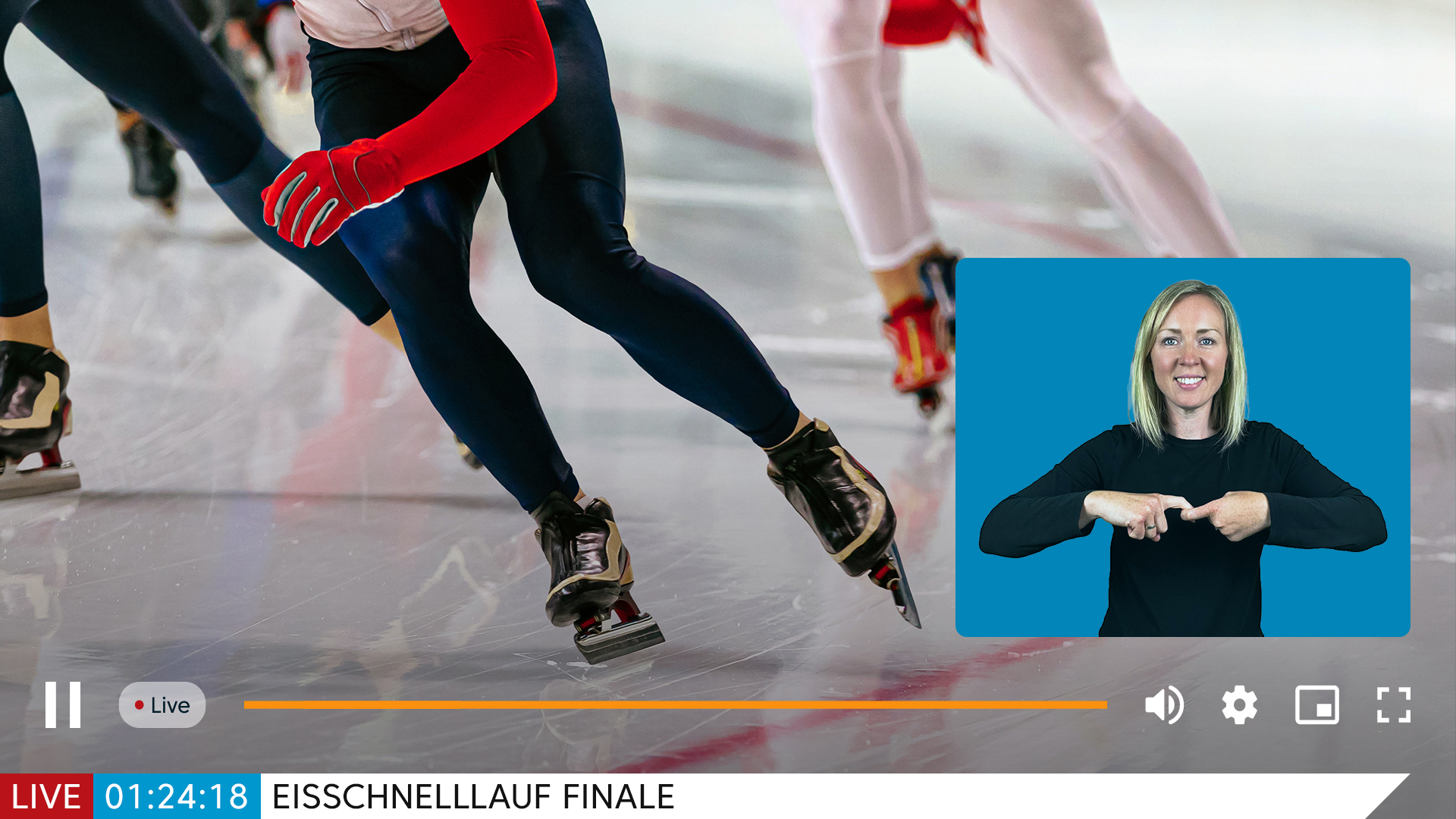
Signapse AI Digital Signer in German
Signapse partners with G&L Systemhaus to launch a live AI Digital Signer for German Sign Language (DGS), expanding real-time global accessibility.
LONDON, UNITED KINGDOM, March 2, 2026 /EINPresswire.com/ -- German Partnership Announced as Global Expansion Accelerates
British accessibility technology company Signapse has announced a strategic partnership with German streaming integrator G&L Systemhaus to deliver their world-leading photo-realistic, live-capable, AI-generated Digital Signer for German Sign Language (DGS).
While the German Sign Language solution is scheduled for market launch in September, the announcement builds on Signapse’s established deployment of British Sign Language (BSL) in the United Kingdom and comes ahead of the forthcoming launch of American Sign Language (ASL).
As digital communication accelerates across media, transport, government, enterprise, and public services, the demand for scalable sign language accessibility continues to grow.
Inclusion beyond subtitles:
Subtitles provide access to spoken language but cannot fully convey the facial expression, emotional nuance, or immediacy intrinsic to sign languages. Text-based communication also assumes strong reading proficiency.
Approximately 200,000 people use German Sign Language regularly or occasionally, many relying on it as their primary everyday language. For this community, meaningful access requires communication delivered directly in sign language.
Signapse’s AI Digital Signer is designed to provide that access in real time across live and on-demand digital environments.
From legal recognition to scalable implementation:
German Sign Language has been officially recognised as an independent language since 2002, and regulatory frameworks such as Germany’s Accessibility Regulation for Information Technology, BITV, define requirements for digital inclusion.
However, implementation remains challenging. While selected programmes are interpreted in sign language, the scale and speed of modern communication make comprehensive human interpretation difficult to deliver consistently.
Through its partnership with G&L Systemhaus, Signapse aims to address this structural gap by enabling scalable integration of sign language into live streaming, public communication, and digital services. The German Sign Language AI Digital Signer is currently in development and is expected to be available from September.
“The implementation of the AI Digital Signer for British Sign Language has clearly demonstrated how powerful and production-ready this technology already is,” said Alexander Leschinsky, CEO of G&L Systemhaus. “We are looking forward to transferring the distinctive strengths of Signapse’s solution to German Sign Language. Using AI in a way that delivers tangible value for people and helps alleviate a real structural shortage is a strong motivation for us in developing this product.”
Production-ready technology, expanding globally: The forthcoming DGS model builds on Signapse’s production-proven AI signer technology already deployed in the UK.
Unlike synthetic or stylised avatars, Signapse’s AI signers are created using extensive video recordings of professional interpreters and developed in close collaboration with Deaf communities and linguistic experts. The British Sign Language model was developed in partnership with the Royal Association for Deaf People to ensure linguistic authenticity and cultural integrity.
Today, the BSL Digital Signer is deployed within the National Rail network, where Deaf passengers receive real-time updates on arrivals, delays, and platform changes in their own language.
Following this rollout, Signapse is preparing the launch of American Sign Language in the United States, further expanding its multilingual capabilities. The German partnership represents the next step in building a scalable, international sign language infrastructure.
Complementing human expertise: Signapse’s AI-supported Digital Signer is designed to complement, not replace, qualified sign language interpreters.
In medical, legal, and highly sensitive contexts, human professionals remain essential. However, the structural gap between everyday communication demand and interpreter availability remains significant. AI can responsibly extend access to routine live updates and digital content where interpreter coverage would otherwise be limited.
“Our mission is to develop our models in partnership with Deaf sign language users, ensuring the language, expression, and cultural integrity of the community are respected at every stage,” said Sally Chalk, Co-founder of Signapse. When partners like G&L move from proof-of-concept to product ambition, it signals something bigger: AI sign language is no longer experimental; we can put it in people's hands. This is rock-solid evidence that we will be the accessibility engine for global content providers."
“Our British Sign Language deployment demonstrated that this technology is production-ready and delivering real-world impact. With ASL launching next and our German partnership now in place, we are continuing to scale sign language accessibility internationally.”
Preparing for September launch:
Through its collaboration with G&L Systemhaus, a provider of streaming solutions for broadcasters, cultural institutions, telecommunications providers, and public bodies, the German Sign Language AI Digital Signer is being prepared for deployment across the German market from September.
As accessibility regulation strengthens and real-time communication becomes embedded across industries, scalable sign language solutions are emerging as a critical component of inclusive digital infrastructure.
Kate Harverson
Signapse
kate@signapse.ai
Visit us on social media:
LinkedIn
Instagram
Facebook
Legal Disclaimer:
EIN Presswire provides this news content "as is" without warranty of any kind. We do not accept any responsibility or liability for the accuracy, content, images, videos, licenses, completeness, legality, or reliability of the information contained in this article. If you have any complaints or copyright issues related to this article, kindly contact the author above.
