

From Colombo to London: Craft, Climate, and Creative Economy Converge in a Global Milestone for Sri Lanka
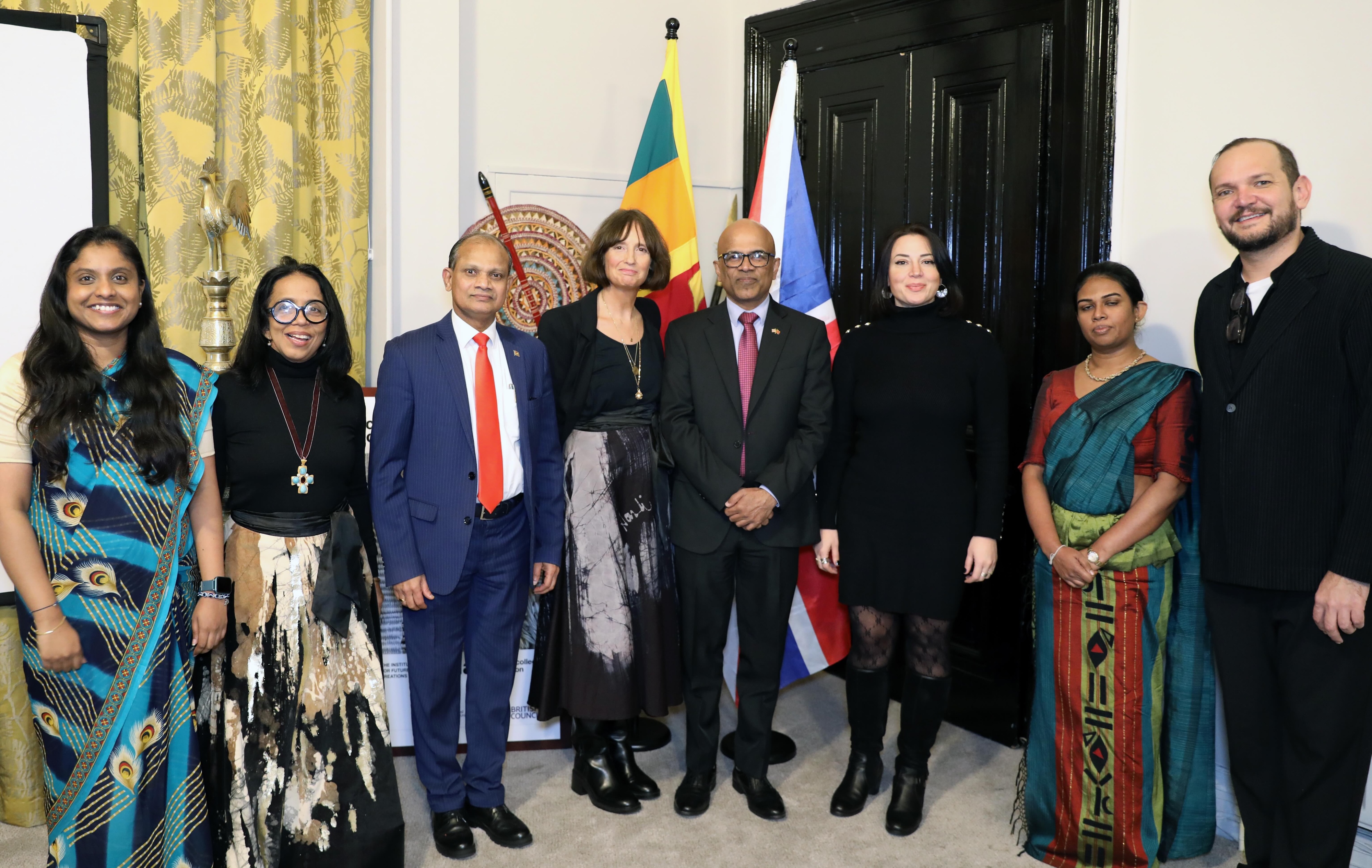
Participants at the EU–Sri Lanka Craft Matchmaking Programme milestone at the Sri Lanka High Commission in London, including Sonali Dharmawardena, Minister (Commercial) Somasena Mahadiulwewa, Hannah Middleton (UAL), His Excellency the Sri Lankan High Comm
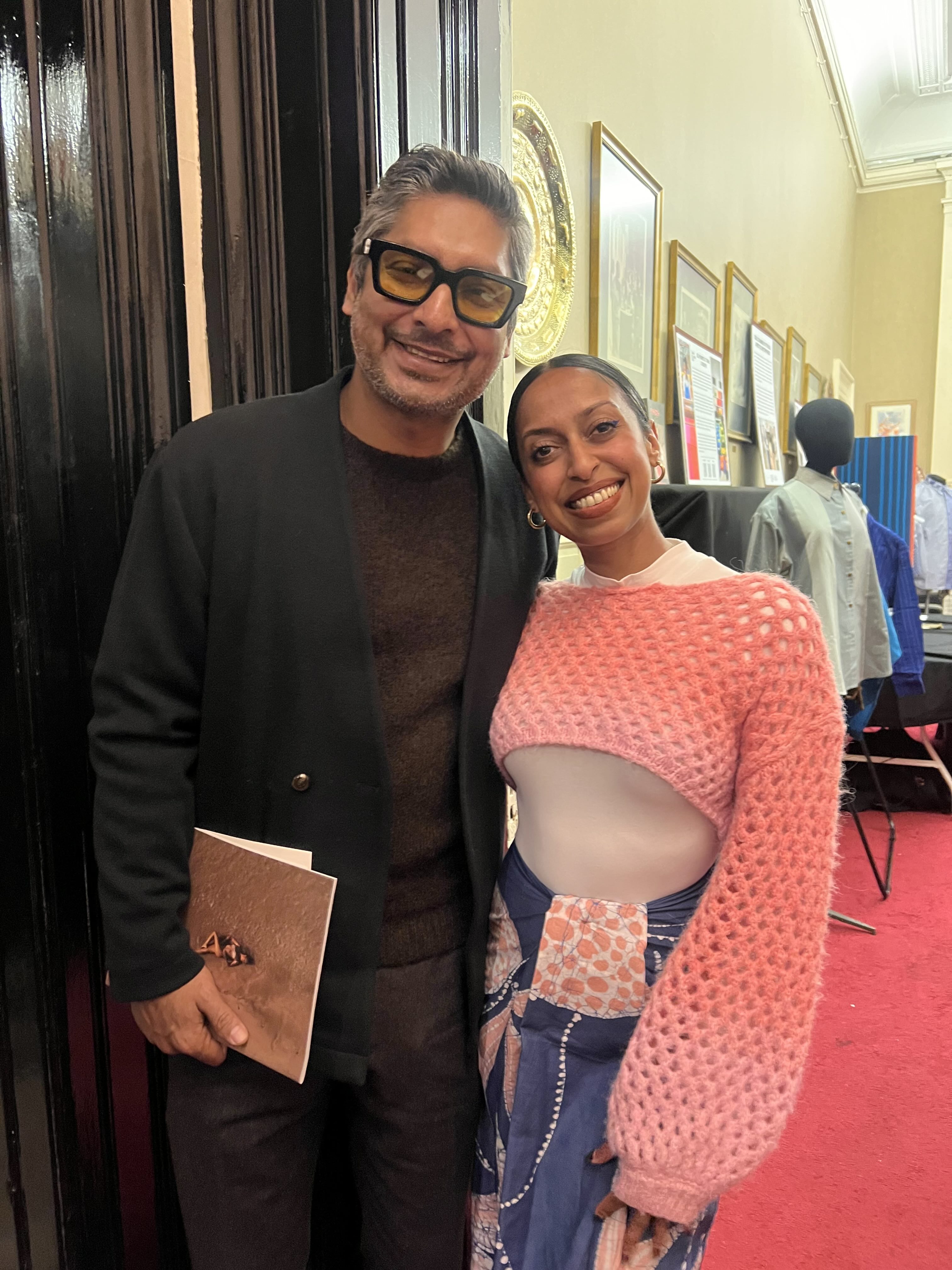
Kumar Sangakkara joins Sri Lankan designer Tarja de Silva at a London milestone event spotlighting craft, design, and the creative economy.
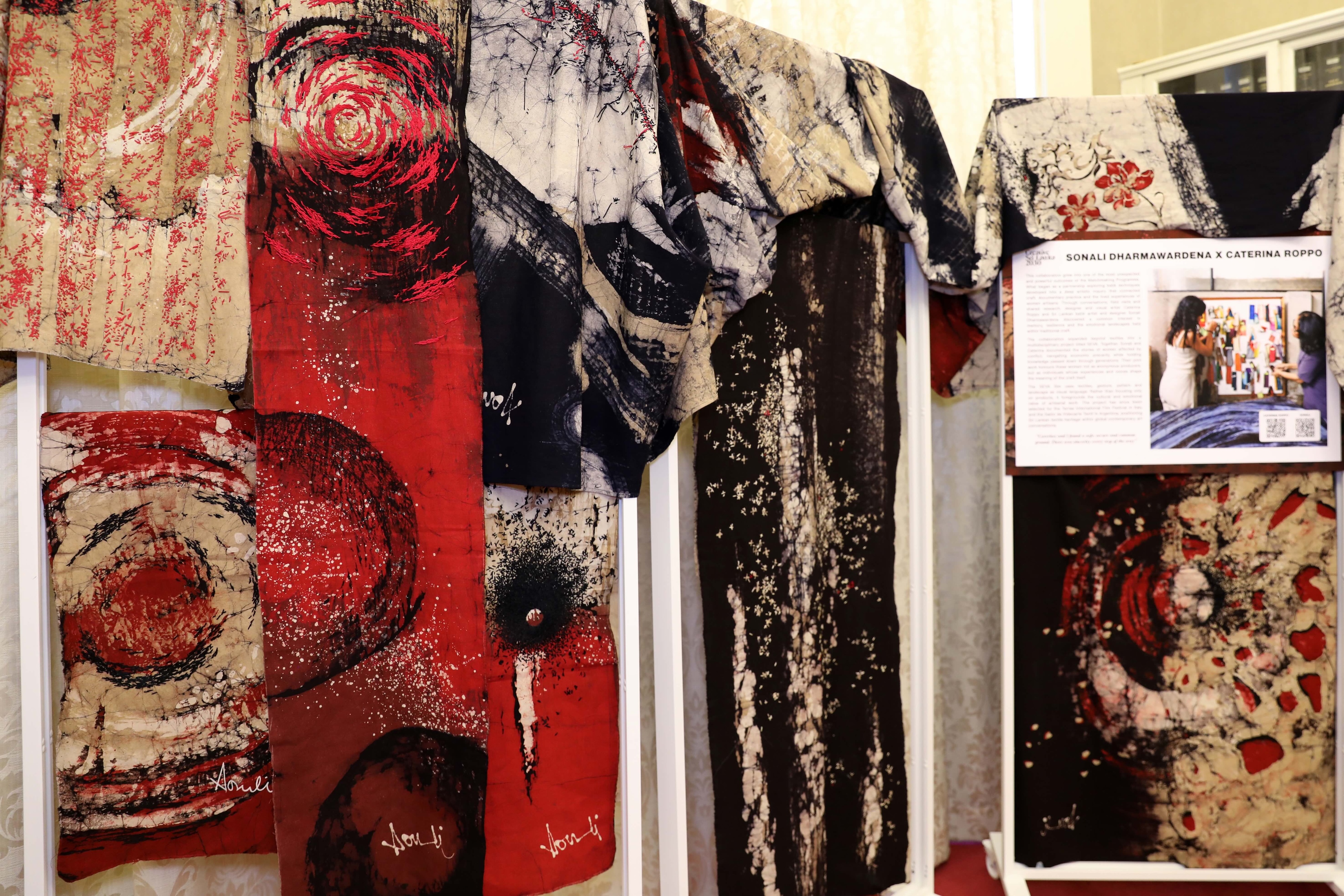
Textile works by Sonali Dharmawardena in collaboration with Caterina Roppo, presented as part of the EU–Sri Lanka Craft Matchmaking Programme.
A global milestone highlights how craft, climate, and creative economy can align to support resilient livelihoods in Sri Lanka
Welcoming partners and stakeholders, His Excellency Nimal Senadheera, High Commissioner of Sri Lanka to the United Kingdom, reflected on the broader importance of the programme at this moment in time. “Sri Lanka’s craft sector carries deep cultural value, but it also represents livelihoods for some of our most vulnerable communities. Strengthening international partnerships through initiatives like this is essential, not only for cultural preservation, but for economic resilience and future opportunity,” he noted.
The milestone comes at a critical juncture for Sri Lanka. Ongoing climate pressures, including recent cyclone impacts, continue to disproportionately affect informal and rural communities, many of whom are also SMEs and craft producers. These communities are often hit first and hardest by environmental shocks, while simultaneously facing limited access to stable markets, fair pricing, and long-term trade relationships. The Matchmaking Programme directly responds to this dual crisis, environmental and economic, by focusing on value-driven design partnerships, ethical production, and resilient market access rather than volume-led extraction.
The programme milestone was framed by a keynote contribution from Dr Safia Minney MBE, whose long-standing work in ethical fashion and social justice connected climate resilience, fair trade, and craft economies. “When climate disruption and broken trade systems intersect, it is informal makers who bear the greatest burden. Craft-led value chains, when designed responsibly, can be part of the solution, supporting livelihoods while respecting environmental limits,” she observed.
At the core of the milestone was the presentation of research findings and collaborative outcomes from the EU–Sri Lanka Craft Matchmaking Programme by Robert Meeder, Lead EU Consultant and Founder of The Institute for Future Creations (TIFC), together with Hannah Middleton of University of the Arts London (UAL). Their presentation outlined how the programme moves beyond short-term interventions, reflecting the ambitions of Sri Lanka’s Creative Sri Lanka 2030 vision by establishing a model based on education, collaboration, and innovation to support long-term creative economic growth.
Hannah Middleton emphasised the role of research and education in supporting systemic change. “This programme demonstrates how academic research, design practice, and policy can work together to create pathways that are both culturally sensitive and economically viable. It is about equipping craft communities to engage with global markets on their own terms,” she said.
Robert Meeder highlighted the programme’s long-term ambition and its relevance to current global challenges. “The Matchmaking Programme was never intended as a one-off. It is a living framework designed to respond to climate vulnerability, informal labour conditions, and unequal trade structures and at the same time align to a great vision of Creative Sri Lanka 2030. By focusing on high-value collaboration rather than scale alone, we can begin to address the structural imbalances that craftspeople face,” he noted.
Sana Ouchtati, Head of the EU Cultural Relations Platform, highlighted the programme’s longer-term vision. “This initiative was never intended as a one-off. Its strength lies in bringing the right actors together across culture, education, policy, and industry to build lasting collaboration. This ecosystem approach reflects the Cultural Relations Platform’s commitment to sustainable and inclusive creative economies.” she said.
Voices from participating designers and makers reinforced this perspective. Textile designer Sonali Dharmawardena spoke about craft as a carrier of cultural memory and environmental knowledge, while jewellery designer Sepideh Mojabi reflected on how Sri Lankan craft intelligence continues to shape contemporary design through ethical collaboration. Their contributions underscored the importance of placing makers at the centre of international exchange. As a panellist in the discussion, Minister (Commercial) of the Sri Lanka High Commission, Somasena Mahadiulwewa, mentioned that ‘’we have to think differently, as our industry back home has been evolving from its ancient time to high quality and sustainable products while catering for niche markets, but not for cheap products or volume-based trade compared to the suppliers in the region.
The milestone also showcased a curated selection of work emerging from the programme, highlighting collaborations between Sri Lankan craft practitioners and European design partners. The works demonstrated how traditional techniques, natural materials, and contemporary design can intersect to create products positioned for higher-value markets, without compromising cultural integrity or environmental responsibility.
The EU–Sri Lanka Craft Matchmaking Programme is delivered in partnership with the Sri Lanka Export Development Board (EDB), supported by the European Union to Sri Lanka and the Maldives and the EU Cultural Relations Platform (CRP), with University of the Arts London (UAL) supported through a British Council grant for the creative entrepreneurial education and mentoring exchange component of the Creative Sri Lanka 2023 Strategy as knowledge partners, and The Institute for Future Creations (TIFC) as programme leader.
As the programme moves forward, this milestone marks the transition from pilot to platform. From Colombo to London, the message is clear. Sri Lanka’s craft sector sits at the intersection of culture, climate, and trade, and addressing its future requires coordinated, international collaboration. In a time of environmental uncertainty and economic strain, investing in craft is not symbolic. It is strategic, human, and urgently necessary.
Brandon Smith
Kopertowski Design Limited
info@tifc.org
Visit us on social media:
LinkedIn
Instagram
Legal Disclaimer:
EIN Presswire provides this news content "as is" without warranty of any kind. We do not accept any responsibility or liability for the accuracy, content, images, videos, licenses, completeness, legality, or reliability of the information contained in this article. If you have any complaints or copyright issues related to this article, kindly contact the author above.
